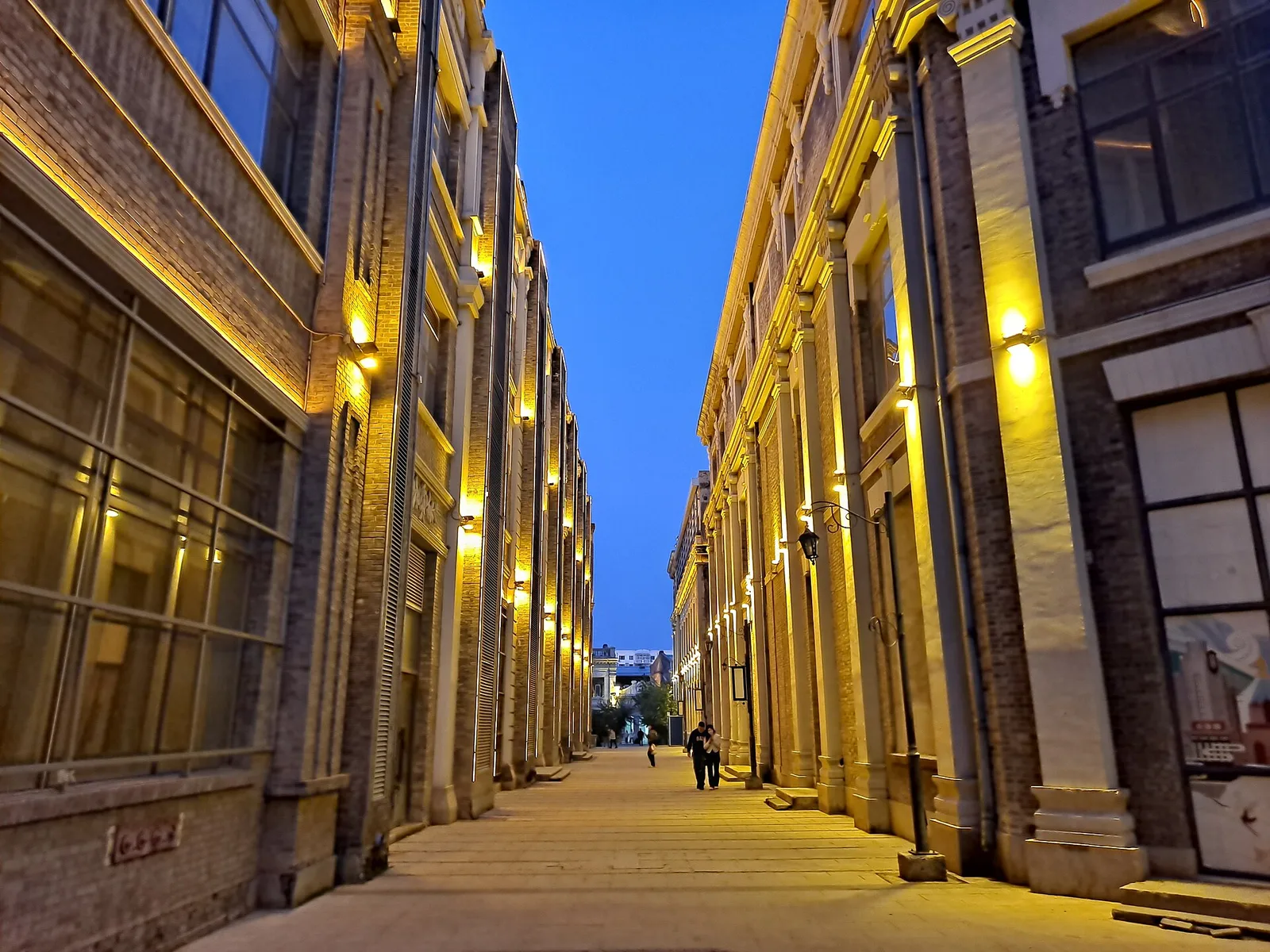
Daowai is the old Chinese quarter of Harbin, developed alongside the Russian-built railway town but shaped by Chinese merchants, migrants, and craftsmen. Its signature architecture is a hybrid often called Chinese Baroque: European facades with Chinese decorative motifs, built by local builders for local businesses. Some blocks have been restored; others are waiting, peeling, or already gone.
In short
Come for a half-day of architecture, market food, and a less polished version of Harbin. Two hours is enough for the core streets; go in the morning when shops are opening and the light is good.
What Chinese Baroque means here
The style is a practical fusion: European proportions and facades, decorated with Chinese motifs and adapted to local materials. It was built in the early twentieth century, when Daowai was a dense commercial district of shops, workshops, bathhouses, and theatres. The result is neither purely Western nor traditionally Chinese, which is exactly why it is interesting.
Restoration has been uneven. Some facades have been cleaned and repainted for tourism; others still show the layers of repair and neglect. The area is not a theme park, and that is part of its appeal. Walk the side streets as well as the main restored blocks; the ordinary life of the district is the point.
What to eat
Daowai is a good place to eat the older, cheaper side of Harbin food: steamed buns, dumplings, braised meats, and old-brand snacks. The famous establishments can have queues, but the quality is generally higher than on Central Street. Look for shops with a local queue rather than a tour-group queue.
Try a bowl of something hot and sit down. Winter eating in Harbin is not about fine dining; it is about warming up. The food guide explains the dishes worth prioritising, including the ones that are more local than tourist-facing.
Timing and changes
Go in the morning. Shops are opening, the streets are active, and the light is better for photographing facades. By afternoon, tour groups arrive and the restored blocks become crowded. Some buildings are closed or under renovation; do not expect every address in an old guidebook to still exist.
The district is changing quickly. If you are interested in architecture, visit sooner rather than later, and be respectful of residents. This is a lived-in neighbourhood, not an open-air museum. Pair the walk with Central Street for the contrast between the Russian-built commercial spine and the Chinese merchant quarter.
Verdict
Worth a morning if you care about architecture and real city life. Not a substitute for the ice sites.
Next in the manual
04 linksField desk / direct line
Not sure this fits your trip?
Send the dates, the group, and what you are deciding between. The field desk will tell you what to cut and what to keep.
Independent advice. No bookings, no commissions, no visa service.