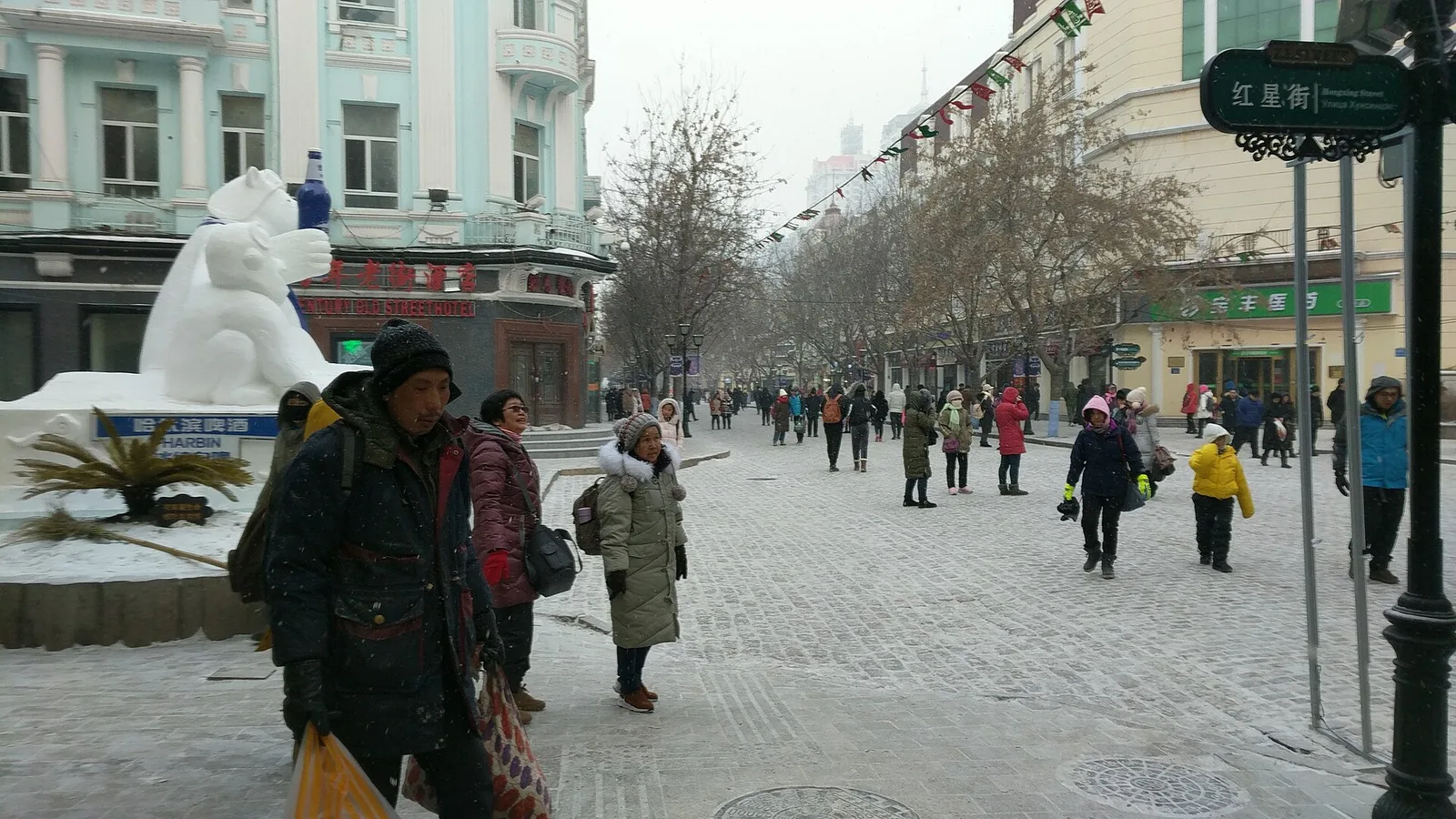
Harbin does not shut down in winter. It runs on a set of adaptations that visitors barely notice: double entrance doors, heated buses, enclosed markets, and a daily rhythm that shifts indoors. Watching how the city copes is one of the most interesting parts of a winter visit, and it explains why some things feel different from a European winter city.
In short
Look for the double-door vestibules, the plastic-wrapped windows, the heated shops, and the food sold straight from the cold. Locals move between warm pods rather than spending long periods outside. Plan your day the same way: short outdoor blocks, warm stops, early dinners.
The double-door city
Most shops and restaurants have a vestibule with two sets of doors. The outer door closes before the inner one opens, keeping the warm air in. Some are elaborate, with curtains and plastic strips; others are simple. Once you notice them, you see them everywhere.
Windows are often double-glazed or covered with plastic for the winter. Balconies become cold storage. The city is full of small, practical solutions that make -25°C livable.
Moving between warm pods
Locals do not walk for an hour in the cold for fun. They move from home to bus to shop to restaurant, with short exposed segments. Buses are heated, malls are warm, and markets are enclosed. The getting around guide explains how to use the metro and taxis in winter.
This is why a visitor's itinerary should be built around warm stops. A long outdoor walk is possible, but it should be planned, not accidental. The cold guide covers the clothing; this note covers the rhythm.
Food and the cold
Winter is an outdoor freezer. Fish, meat, and frozen fruit are sold from stalls without refrigeration. The frozen pear guide explains the most famous example. Ice cream is eaten outdoors in winter, not in spite of the cold but because it is there.
Markets are a good place to see this. Daowai has traditional markets; the Hongbo area has food shops. Go in the morning when the city is waking up and the stalls are busy.
What it means for visitors
Do not fight the rhythm. Plan two outdoor blocks a day, with a warm stop between them. Eat dinner early; many restaurants close by 21:00. Keep your phone warm, and carry less than you would in summer.
The city is not a survival exercise. It is a working city with a winter routine. Once you adjust, the cold becomes part of the texture rather than an obstacle. The 3-day route is built around this rhythm.
Note
Harbin lives in warm pods, not outdoors. Copy the local rhythm and the cold stops being a problem.
Next in the manual
04 linksField desk / direct line
Not sure this fits your trip?
Send the dates, the group, and what you are deciding between. The field desk will tell you what to cut and what to keep.
Independent advice. No bookings, no commissions, no visa service.