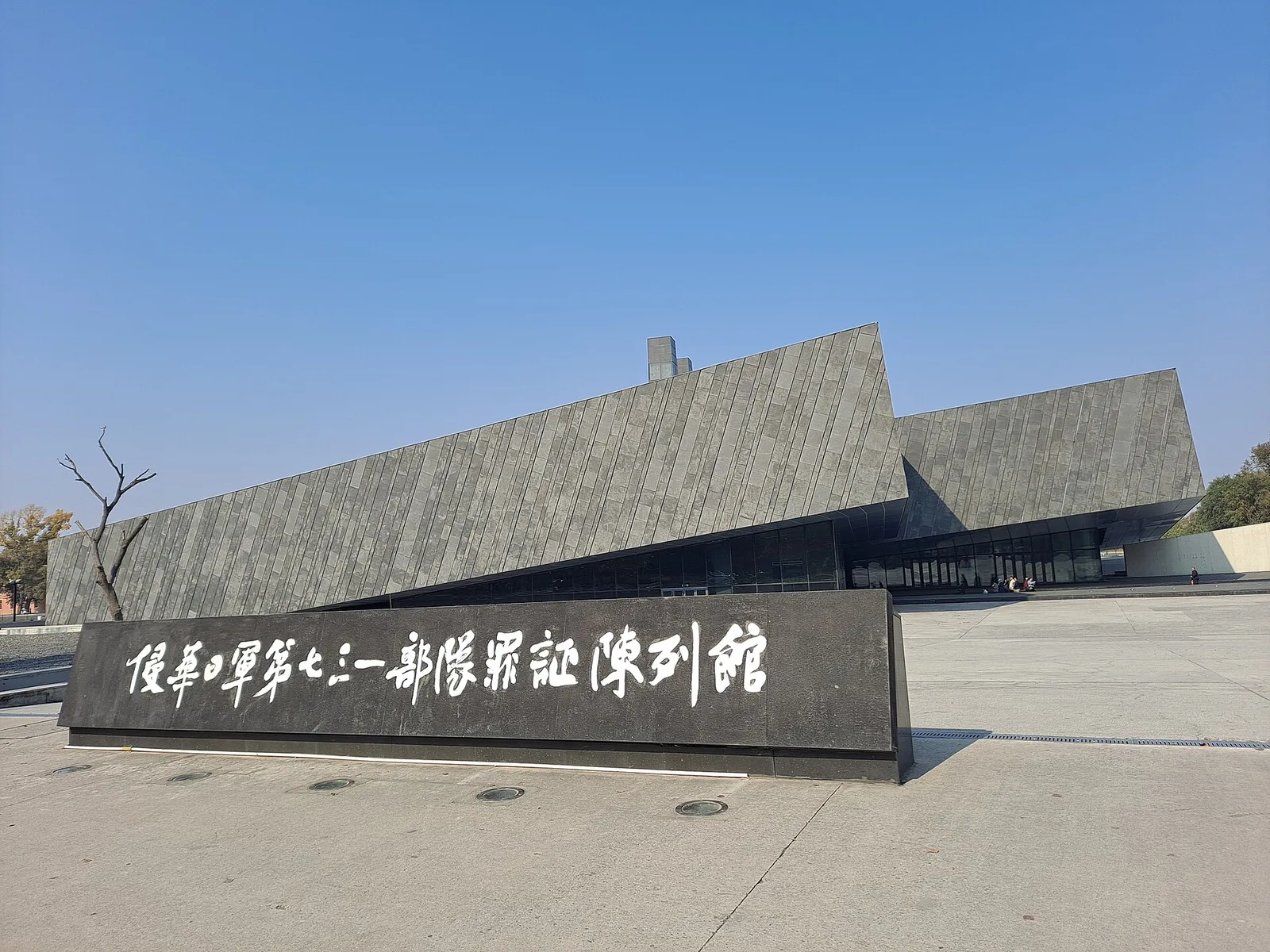
The Unit 731 Museum documents the Japanese biological-warfare programme based near Harbin during the occupation of Manchuria. It is a serious, well-presented, and emotionally heavy museum. It is not entertainment, and it is not suitable for young children. It is, however, one of the most important historical sites in northeast China, and it explains a part of the twentieth century that is often absent from English-language travel coverage.
In short
Allow two to three hours, go with time to process, and check the closure day before you travel. Entry is usually free with identification. It is a 30–40 minute taxi or metro-plus-taxi ride from the centre.
Why it matters
Unit 731 was a covert Japanese biological-warfare unit that operated in Pingfang, then a military complex outside Harbin. The museum presents documents, photographs, artefacts, and testimony about the programme and its victims. The presentation is direct, and some sections are graphic. It is not designed to be comfortable.
For visitors from countries where this history is rarely taught, the museum fills a gap. It also raises difficult questions about how war crimes are remembered, who is held responsible, and what evidence survives. Go with curiosity and respect rather than a checklist mentality.
What the visit is like
The main exhibition is indoors, which makes it a useful cold-weather option, but the subject matter is heavy. You will read a lot, stand a lot, and probably need a break. The site includes the remains of the complex and a memorial area. Photography rules vary by section; follow the signs.
The museum is not a light half-hour stop. If you are travelling with children, assess whether they are old enough to handle the content. If you are with a group, agree in advance that people can leave early or wait outside. The Pingfang district guide explains the surrounding area, which is otherwise not a tourist destination.
Logistics
The museum is in Pingfang, south of central Harbin. A taxi is the simplest option; the metro plus a short taxi also works but adds time. Entry is usually free, but you need identification, and foreign visitors should bring a passport. The museum typically closes on Mondays; confirm before making the trip.
Because the museum is far from the main sights, do not try to squeeze it between the ice park and dinner. Give it a dedicated half-day, and plan something quiet afterward. It is also worth reading a little before you go; the exhibits assume some background knowledge, and the English signage is helpful but not exhaustive.
Verdict
Important and well done, but emotionally demanding. Go if you have the time and the headspace; skip with children.
Next in the manual
04 linksField desk / direct line
Not sure this fits your trip?
Send the dates, the group, and what you are deciding between. The field desk will tell you what to cut and what to keep.
Independent advice. No bookings, no commissions, no visa service.