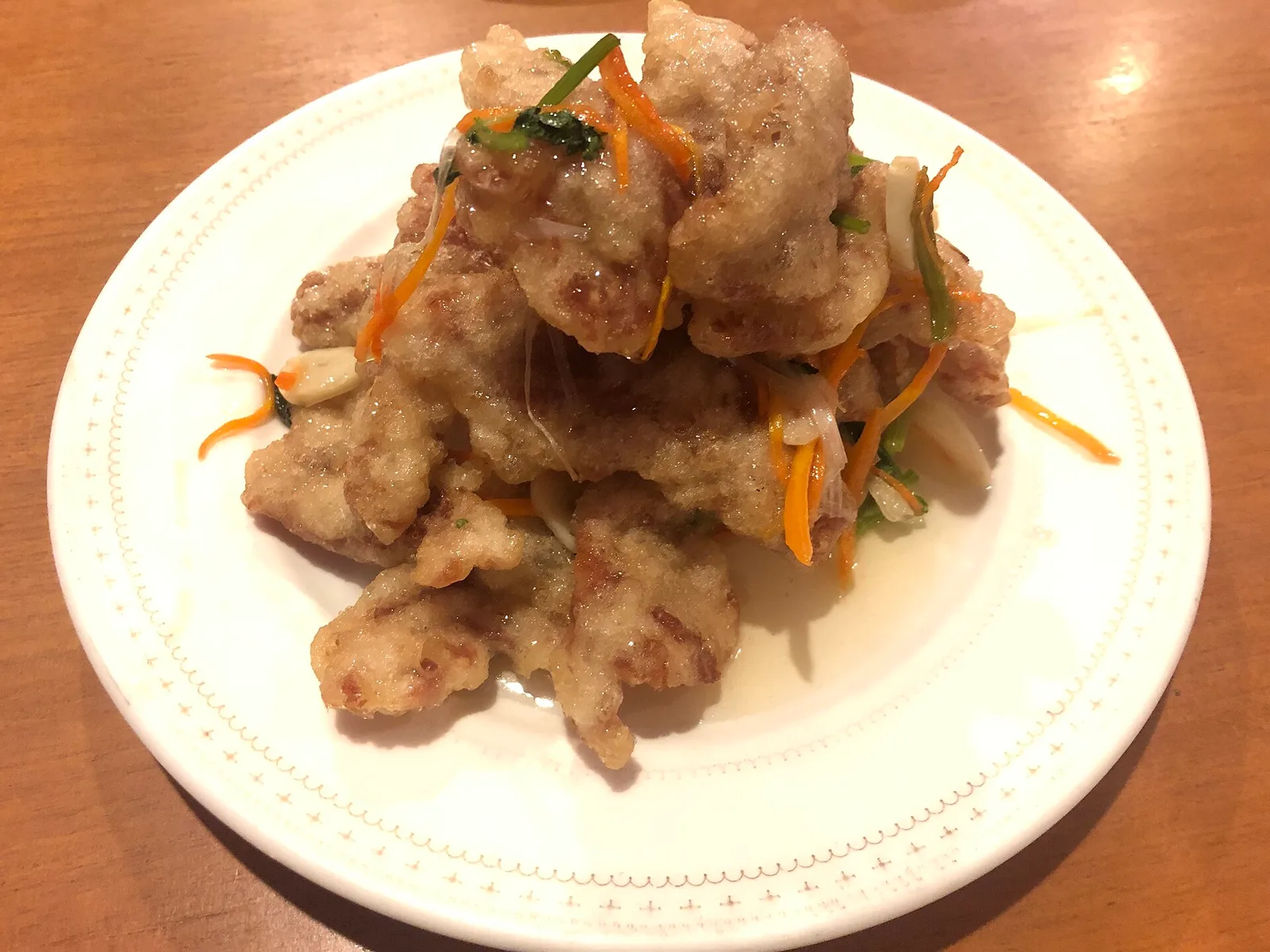
Guobaorou is the dish Harbin claims as its own: slices of pork loin, coated in a thin starch batter, fried until crisp, then tossed in a sweet-sour sauce. The local version is lighter and more vinegar-forward than the glowing red-orange version served in many overseas Chinese restaurants. It is the first dish to order if you want to understand what the city thinks good food tastes like.
In short
Order it in a proper restaurant, not a street stall. The batter should stay crisp under the sauce, and the plate should smell of vinegar rather than sugar. It is best shared, because a full portion is rich.
What makes it local
The Harbin version uses a starch batter and a sauce built on vinegar, sugar, and a little soy, with ginger, garlic, and sometimes coriander. The result should be crisp at the edges and tender inside, with a sauce that is thin enough to coat but not heavy enough to soften the crust. If the pork arrives sitting in a pool of sauce, it was plated too early.
The dish is often attributed to a chef who adapted a northern sweet-sour recipe for Russian tastes in the early twentieth century. The story is contested, but the style is real: Harbin's food has been shaped by Russian, Chinese, and northeastern influences for more than a century. Guobaorou is the most edible evidence of that history.
How to order it
It is a shared dish, not a solo main. Two people can finish a portion with rice and a vegetable; four people should order two mains. Pair it with something sour or green to cut the sweetness, such as a vinegar-dressed salad or a plate of stir-fried greens.
Ask for it 'guo bao rou' and point at the menu; every home-style restaurant will have it. Prices vary with the restaurant and the cut, but ¥40–70 is the normal range in the city. If a tourist-strip restaurant charges double, you are paying for the address.
Where to eat it
The best versions come from old-fashioned home-style restaurants, not food stalls. Look for a busy dining room with groups sharing plates, and avoid anywhere with a photo menu in five languages. The Daowai and Nangang districts have stronger local options than Central Street.
If you are unsure, ask your hotel for a recommendation within walking distance. The dish is common enough that a good hotel kitchen will have an opinion. For a broader orientation, see the Harbin food guide.
Verdict
The one dish to order first. Judge it by the vinegar and the crunch, not the colour.
Next in the manual
04 linksField desk / direct line
Not sure this fits your trip?
Send the dates, the group, and what you are deciding between. The field desk will tell you what to cut and what to keep.
Independent advice. No bookings, no commissions, no visa service.