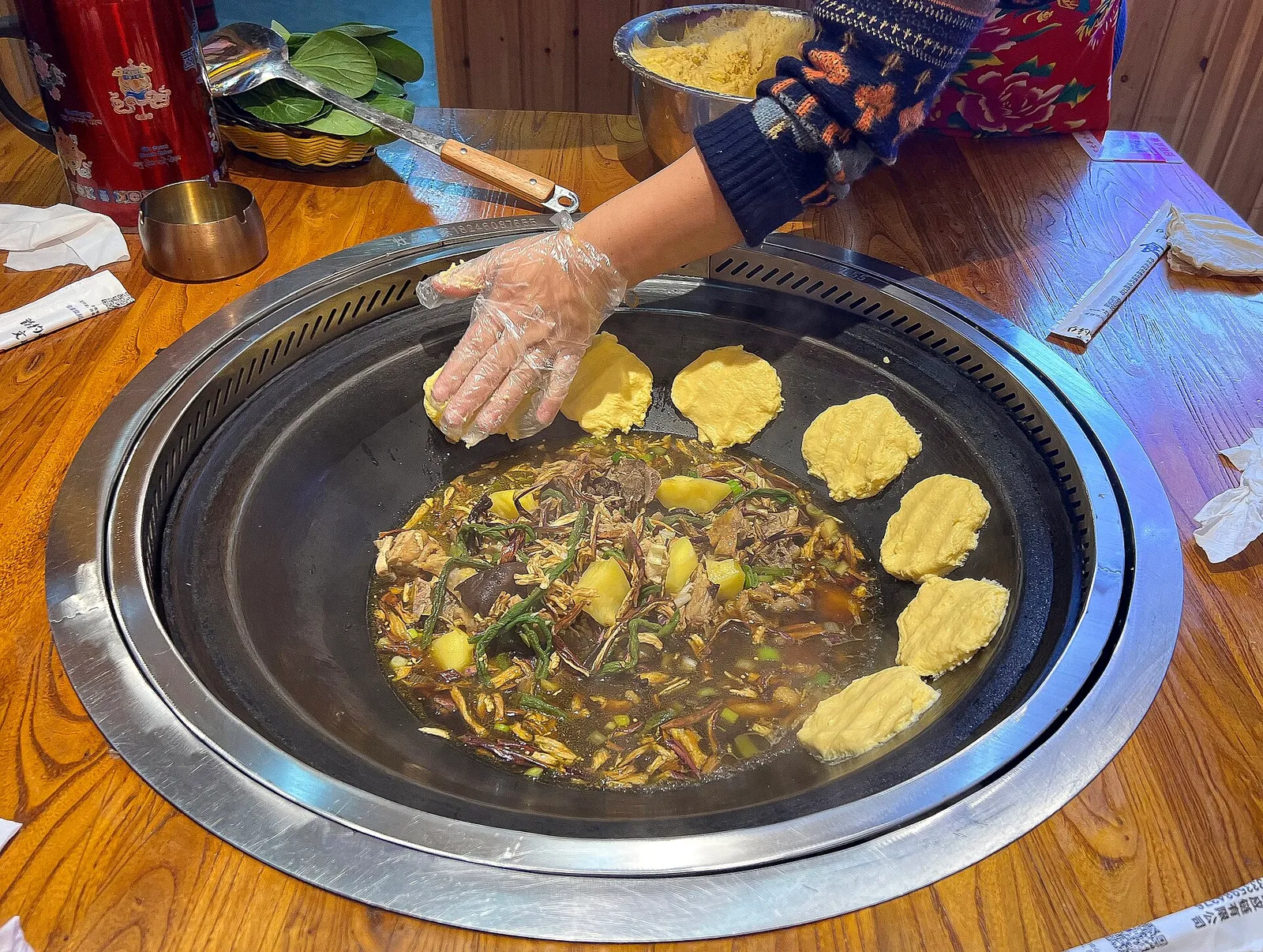
Harbin's food is often reduced to guobaorou and red sausage. Both matter, but the winter table is broader: pickles, stews, dumplings, frozen fruit, and a serious amount of cabbage. The cuisine is shaped by the climate, the Russian period, and the food culture of northeast China. Understanding that makes eating here more than a checklist.
In short
Look for suancai (pickled cabbage), iron-pot stew, dumplings, grilled cold noodles, and frozen pears. Red sausage and dalieba are the Russian-inflected layer. The best meals are in family restaurants and old neighbourhoods, not necessarily on Central Street.
Preservation as flavour
Before greenhouses and cold-chain logistics, winter meant months without fresh vegetables. Pickling cabbage and radishes was a survival strategy. Suancai, the fermented cabbage, became a defining flavour: sour, savoury, and good with pork, blood sausage, and noodles.
The suancai and pork guide explains the dish. The broader logic is preservation: salted, smoked, frozen, and pickled foods that carry the household through the cold.
The Russian layer
Red sausage, dalieba bread, and kvass came from the Russian period and stayed. They are now Harbin food, not foreign food, and locals have strong opinions about which shop does them best. The red sausage guide and dalieba and kvass guide cover the details.
The Russian influence is real but limited. It sits alongside a much stronger northeast Chinese tradition of stews, dumplings, and barbecue. Do not expect a Russian restaurant scene; expect a few iconic foods.
How to eat
Order family-style and share. Portions are large. Start with a cold dish, add a stew, and finish with dumplings or noodles. In winter, hot pot and iron-pot stew are the most satisfying options. The iron-pot stew guide explains what to order.
Street food is good, especially grilled cold noodles and frozen fruit. The frozen pear guide explains the ritual. Hygiene varies; choose busy stalls with high turnover.
Where to eat
Daowai has the deepest food culture, with old restaurants and market stalls. Central Street is convenient but more expensive and tourist-oriented. The food hub lists the dishes; the district guides explain where to find them.
Reservations are uncommon in casual restaurants. Peak dinner hours are 17:30–19:30. Many places close early by big-city standards. The budget guide gives a sense of costs.
Note
Sour cabbage, stew, dumplings, and frozen fruit. Eat in Daowai, share everything, go early.
Next in the manual
04 linksField desk / direct line
Not sure this fits your trip?
Send the dates, the group, and what you are deciding between. The field desk will tell you what to cut and what to keep.
Independent advice. No bookings, no commissions, no visa service.